
Paper wasp nests usually have an open, umbrella-shaped comb with visible cells, while hornet nests are often enclosed in a rounded, papery shell with an entrance. Comparing the nest’s shape, structure, and location from a safe distance can help you tell them apart and decide when to contact a pest control professional.
Both insects may build nests around homes and businesses, including near doors, patios, roof edges, and other areas people use every day. Knowing the common signs can help you respond safely without disturbing an active nest.
What Are the Main Differences Between Paper Wasp Nests and Hornet Nests?
The main difference is the nest structure. Paper wasps usually build an exposed comb, while many hornets build a nest with an outer paper-like covering. Both use chewed plant fibers to create their nests.
Nest appearance can vary by species and colony size, so location alone is not enough to identify the insect. Compare several visible features rather than relying on one clue.
Paper Wasp Nests vs. Hornet Nests: A Quick Comparison
| Feature | Paper Wasp Nest | Hornet Nest |
| Shape | Usually open and umbrella-shaped | Often rounded or oval |
| Structure | Exposed comb | Comb usually covered by an outer shell |
| Cells | Usually visible from below | Usually hidden inside the shell |
| Material | Papery fibers made from chewed plant material | Papery fibers made from chewed plant material |
| Entrance | Open comb is exposed | Often has an opening in the outer covering |
| Common locations | Eaves, porch ceilings, roof overhangs, and sheltered surfaces | Trees, shrubs, building cavities, and other protected areas, depending on the species |
| Main identifying clue | Visible cells in an open comb | Enclosed nest with a papery shell |
Quick identification tip: An open comb with visible cells may indicate paper wasps. A rounded, enclosed nest may indicate hornets. Do not approach an active nest to inspect these features more closely.
How to Identify a Paper Wasp Nest
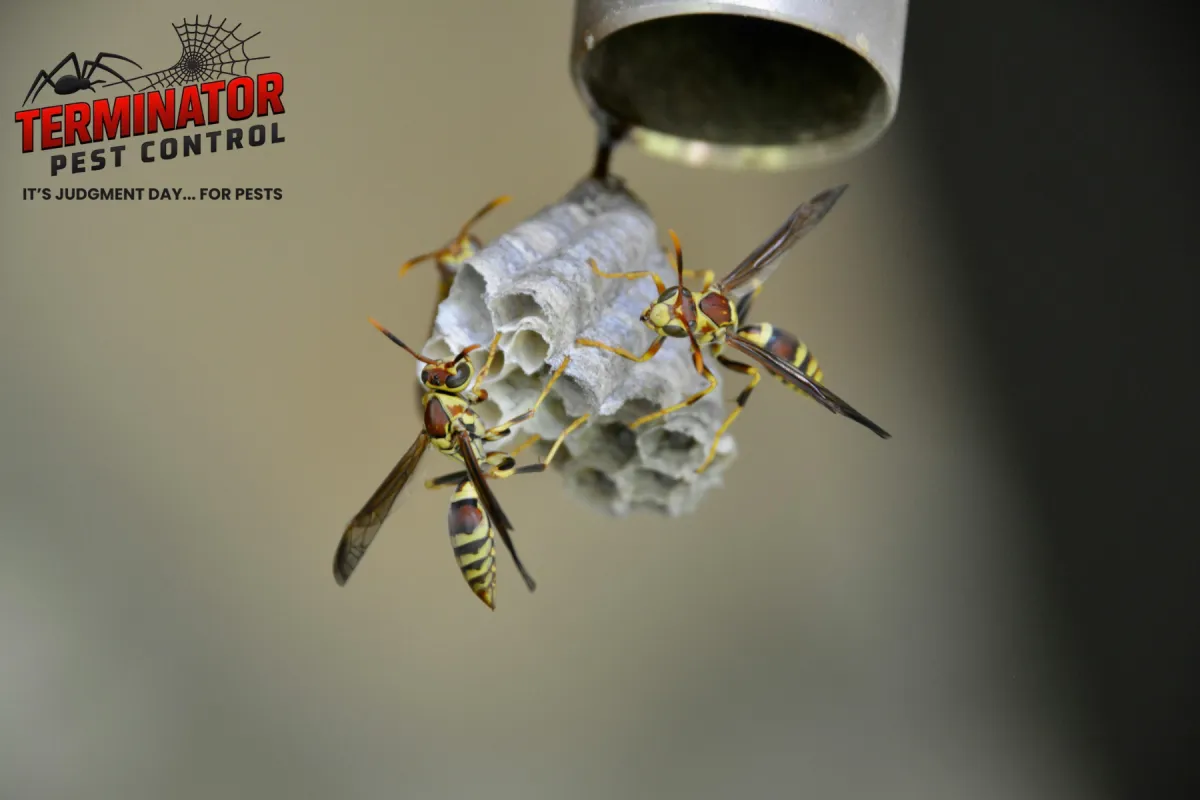
Paper wasp nests are often recognizable because their comb is exposed. The nest usually consists of a group of cells attached to a narrow stalk rather than a complete outer shell.
Look for an Open, Umbrella-Shaped Structure
A typical paper wasp nest resembles an upside-down umbrella. The comb hangs from a short stalk and may grow larger as the colony develops.
Paper wasps often attach nests beneath roof edges, porch ceilings, decks, and other sheltered surfaces. These spots offer some protection from the weather and provide a place for the colony to grow.
Check for Exposed Hexagonal Cells
Paper wasp nests contain small cells where the colony raises its young. From a safe distance, the comb may look like a honeycomb with several small openings facing outward or downward.
Adult wasps may rest on the comb or move around it. If you notice insects repeatedly returning to the same spot, a nest may be nearby. Do not touch the structure or approach it to confirm the cell shape.
Observe Where the Nest Is Attached
Paper wasps commonly attach their nests to protected surfaces around buildings. Look for possible nesting activity near:
- Roof overhangs and eaves.
- Porch ceilings and covered entryways.
- Deck railings and sheltered outdoor structures.
- Corners beneath awnings or other protected surfaces.
For homeowners in Cambria, checking sheltered outdoor areas from the ground can help reveal signs of nesting without putting anyone at risk.
How to Identify a Hornet Nest
Many hornet nests look different from paper wasp nests because their comb is covered by an outer shell. The nest may appear round, oval, or pear-shaped, depending on the species and how far the colony has developed.
Look for an Enclosed, Papery Shell
A hornet nest often has layers of paper-like material around the inner comb. These layers may create a swirled or striped appearance, with the outer shell protecting the nest inside.
Some hornets build nests high in trees, while others may use shrubs or protected spaces in buildings. Since nesting habits vary by species, do not assume every nest in a tree belongs to hornets or that every nest near a building belongs to paper wasps.
Look for a Nest Entrance
An enclosed hornet nest often has a visible opening that allows insects to enter and leave. From a safe distance, you may notice hornets following a repeated flight path to the same point.
Do not stand near the entrance to watch their activity. Avoid blocking the opening, shaking nearby branches, or disturbing the nest. A threatened colony may respond defensively.
Consider the Nest’s Location
Depending on the species, hornets may build nests in:
- Tree branches or other elevated outdoor locations.
- Shrubs and dense vegetation.
- Wall voids, roof spaces, or other building cavities.
- Other sheltered spots with room for the colony to grow.
If you suspect a nest is inside a wall or roof, do not open the area yourself. Insects may be present in hidden spaces, and disturbing the nest could increase the risk of stings.
Which Signs Should You Compare Before Identifying a Nest?
Nest shape is a useful starting point, but it is best to consider several clues together. The following table can help you describe what you see to a professional pest control in Cambria, WI without approaching the nest.
| What You Notice | What It May Indicate |
| Open comb with visible cells | A possible paper wasp nest |
| Rounded nest with an outer paper shell | A possible hornet nest |
| Insects entering one opening in an enclosed shell | Activity consistent with an enclosed nest |
| Insects gathering on an exposed comb | Activity consistent with an open paper wasp nest |
| Repeated insect traffic around a roof or wall gap | A nest may be hidden in a building cavity |
| Nest near a doorway or walkway | A location where professional assessment may be especially important |
These signs are clues, not a guarantee of species identification. Nest size, color, and location can overlap, and the appearance may change as the colony grows.
What Should You Do If You Find a Paper Wasp or Hornet Nest?
The safest approach is to avoid disturbing the nest and seek professional help when needed. Even a small nest may contain active insects that defend their colony if they feel threatened.
Follow these steps:
- Keep your distance. Do not touch, shake, hit, or attempt to remove the nest.
- Keep children and pets away. If the nest is near a doorway, patio, or walkway, use another route when possible.
- Observe from a safe location. Note the nest’s general shape, attachment point, and the direction insects travel.
- Do not block the entrance. Avoid sealing gaps or plugging openings when insects may be inside.
- Contact a pest control professional. Share the nest’s location and the visible signs you noticed.
- Follow the recommended plan. The right response depends on the insect, nest location, activity, and level of risk.
If you need pest control in Cambria, choose a provider that can assess the situation and explain the available options before work begins. A clear assessment helps you understand what needs attention and how to reduce the chance of future nesting.
Common Myth: All Papery Insect Nests Are the Same
Myth: If a nest looks like paper, it must belong to the same kind of stinging insect.
Fact: Paper wasps and hornets both use chewed plant fibers to build papery nests, but their structures often differ. Paper wasps usually leave their comb exposed, while many hornets build an outer shell around it.
Keep these points in mind:
- Similar material does not mean the same species. Different insects can use similar fibers to build nests.
- Location is not proof. Several types of stinging insects may nest around trees, roof edges, or buildings.
- Nests change over time. A growing colony may look different from one in its early stages.
- Misidentification can be risky. Getting too close to inspect a nest may disturb the insects and increase the chance of stings.
If you cannot identify a nest from a safe distance, do not approach it for a better view. A professional can assess the visible signs and recommend the next step.
Applying Our “Expert Technicians Provide Fast, Reliable Solutions” Approach to Stinging Insects
At Terminator Pest Control, “expert technicians provide fast, reliable solutions” means identifying the problem, assessing the situation, explaining the recommended control method, and discussing practical prevention steps. This approach helps customers understand what is happening and what needs to be done instead of relying on guesswork.
Step 1: Identify the Insect and Nest Type
Technicians assess the visible nest structure and insect activity. An exposed comb may suggest paper wasps, while an enclosed, papery shell may suggest hornets. Proper identification helps guide the next steps.
Step 2: Assess the Nest’s Location and Risk
A nest beneath an eave may present a different concern from one near a busy entrance or inside a wall cavity. The assessment considers where the nest is located, how people use the area, and whether the activity creates a safety concern.
Step 3: Recommend an Appropriate Control Method
Once the situation has been assessed, Terminator Pest Control can recommend a control method based on the insect and nest location. The company’s stinging insect service page explains that its team identifies the species, assesses the situation, and recommends an appropriate method of control. Exterior applications may also help prevent stinging insects, particularly paper wasps, from establishing nests around a structure.
Step 4: Explain Prevention and Follow-Up
Reliable service also means helping customers understand how to reduce the chance of future nesting. Depending on the property, this may include checking sheltered surfaces, monitoring areas where nests have appeared before, and discussing suitable prevention steps.
For property owners seeking Cambria pest control, a clear assessment and practical recommendations can make it easier to decide how to handle a nest near an entryway or another frequently used outdoor area.
Terminator Pest Control focuses on professional service, clear communication, and recommendations tailored to the situation. Visit the service page to learn more about the company’s approach.
People Also Ask: Paper Wasp Nests vs. Hornet Nests
How Can You Tell a Paper Wasp Nest From a Hornet Nest?
Paper wasp nests usually have an open comb with visible cells, while many hornet nests have an enclosed, rounded shell made from papery material. Compare the overall structure from a safe distance.
Do Paper Wasps and Hornets Build Nests From the Same Material?
Both use chewed plant fibers to create a paper-like material. The main difference is the structure: paper wasps usually build exposed combs, while many hornets cover their combs with an outer shell.
Where Do Paper Wasps Usually Build Their Nests?
Paper wasps often build nests beneath eaves, porch ceilings, roof overhangs, and other sheltered surfaces. These locations provide protection while the colony develops.
Are Hornet Nests Always Found in Trees?
No. Depending on the species, hornets may nest in trees, shrubs, building cavities, roof spaces, or other protected locations. The nest’s location alone is not enough to identify the insect.
Should I Remove a Paper Wasp or Hornet Nest Myself?
It is safer not to disturb an active nest. Stinging insects may defend their colony, so contact a qualified pest control professional for guidance, especially when the nest is close to people or difficult to reach.
When Should I Call a Pest Control Professional About a Nest?
Seek professional help if the nest is active, near a doorway or walkway, difficult to access, or hard to identify. Avoid approaching the nest to confirm its type.
Identify the Nest Safely and Choose the Right Next Step
Paper wasp nests usually have an open comb with visible cells, while many hornet nests have a rounded, enclosed shell. These features can help you recognize possible nesting activity, but they cannot always confirm the species. Terminator Pest Control can help assess the situation and recommend the appropriate next steps. Keep your distance and avoid disturbing the nest if you are unsure.
If you find a nest around your home or business, we can assess the situation and explain the available options. Contact us today to discuss your concerns and request an inspection.