
Yellow jackets may be nesting inside your walls if you see them repeatedly entering and leaving the same exterior gap, hear buzzing inside a wall cavity, or notice frequent activity around one section of your home. These signs can suggest a hidden nest, but they do not confirm its presence. Avoid sealing the opening or disturbing the area, and contact a pest control professional for an assessment.
What Are the Common Signs of Yellow Jackets Nesting Inside Walls?
Yellow jackets can use sheltered spaces to build nests, including wall cavities that connect to openings on the outside of a building. Because the nest may be hidden, you might notice insect activity before you see where the insects are nesting.
Look for these signs without approaching or disturbing the suspected nest.
1. Yellow Jackets Repeatedly Entering and Exiting Wall Gaps
Repeated activity around the same opening is one of the clearest signs of a possible nest nearby. You may see yellow jackets flying into a gap in the siding, a soffit, a roof edge, or an opening around a pipe or utility line.
A consistent pattern is more meaningful than seeing a single insect. If yellow jackets keep using the same opening, observe from a safe distance and avoid trying to inspect the gap yourself.
2. Buzzing Sounds Coming From Inside a Wall
Buzzing or faint rustling sounds may indicate insect activity inside a wall cavity. You might notice these sounds near the area where yellow jackets are entering the building.
However, sounds alone cannot confirm that a nest is present. If you hear unusual noises and also notice repeated yellow jacket activity, a professional assessment can help determine what may be happening.
3. Yellow Jackets Appearing Near Windows and Doors
Finding yellow jackets indoors does not automatically mean they are nesting inside your walls. They may enter through open doors, damaged screens, or gaps around windows and other exterior features.
Repeated sightings near the same window or section of a room deserve closer attention, particularly if insects are also entering an exterior wall opening nearby. Avoid following them into tight spaces or opening the wall to find their source.
4. Gaps Around Siding, Vents, or Roof Edges
Small exterior openings can provide access to sheltered areas. Check for visible gaps around siding, soffits, fascia, vents, and utility lines from a safe location.
An opening alone does not prove that yellow jackets are nesting inside. Repeated insect activity at the same spot is a stronger reason to arrange an assessment.
5. Increased Activity Around One Section of the House
You may notice yellow jackets flying around a particular wall, roofline, or corner of the building. If they repeatedly disappear into one opening, a hidden nest may be nearby.
For homeowners in Sun Prairie, noticing where the insects gather can help explain the concern when contacting a professional. Do not stand close to the wall or disturb the entrance to get a better look.
How Can You Distinguish a Wall Nest From Other Yellow Jacket Activity?
Yellow jackets may fly around a property while searching for food or traveling to a nest outside the building. The location and pattern of their activity can help indicate whether they may be using an opening in the wall.
| What You Notice | Possible Explanation | Recommended Action |
| Yellow jackets repeatedly enter one wall gap | A nest may be inside or near the wall cavity | Observe from a safe distance and arrange an assessment |
| Yellow jackets fly around the yard without using one opening | A nearby outdoor nest or food source may be attracting them | Avoid approaching suspected nests |
| Buzzing seems to come from inside a wall | Possible insect activity within a cavity | Do not open the wall to investigate |
| Yellow jackets occasionally appear indoors | They may be entering through a door, window, or exterior gap | Look for recurring activity and possible entry points |
| Yellow jackets gather near a roof edge or soffit | A nest may be near the roofline or inside a connected cavity | Have the area assessed professionally |
Yellow Jackets vs. Other Stinging Insects
Different stinging insects can nest around buildings, and their appearance may provide useful clues. However, identifying an insect from a distance can be difficult, especially when the nest is hidden.
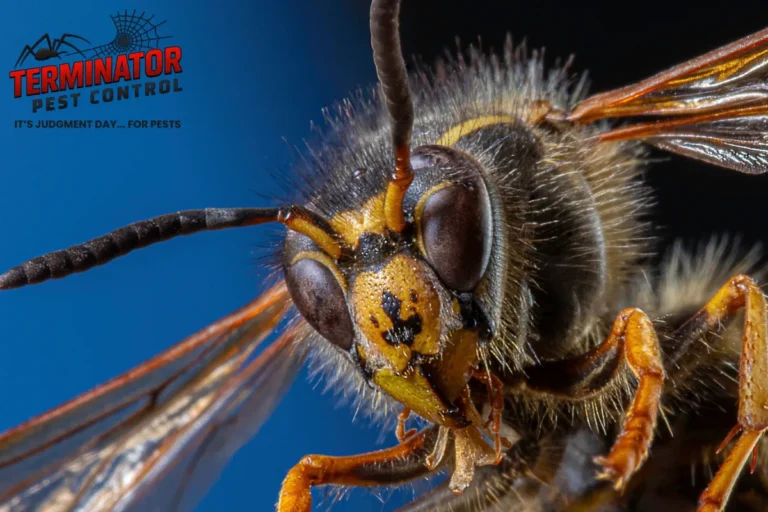
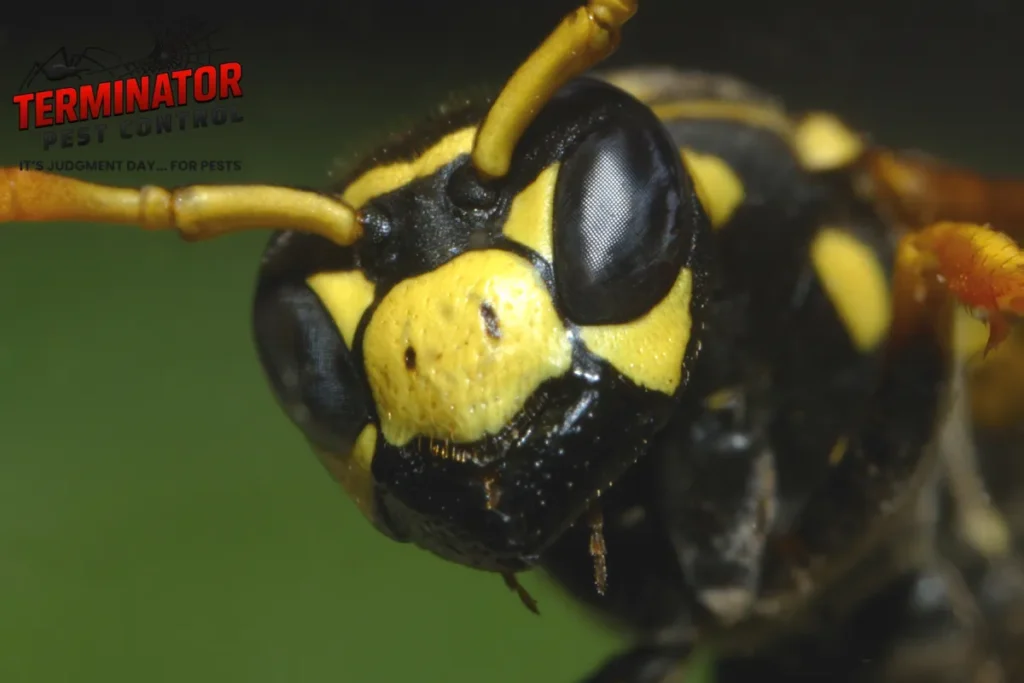
- Yellow jackets: Often have yellow-and-black markings and relatively smooth bodies. Depending on the species, they may nest underground or in sheltered cavities.
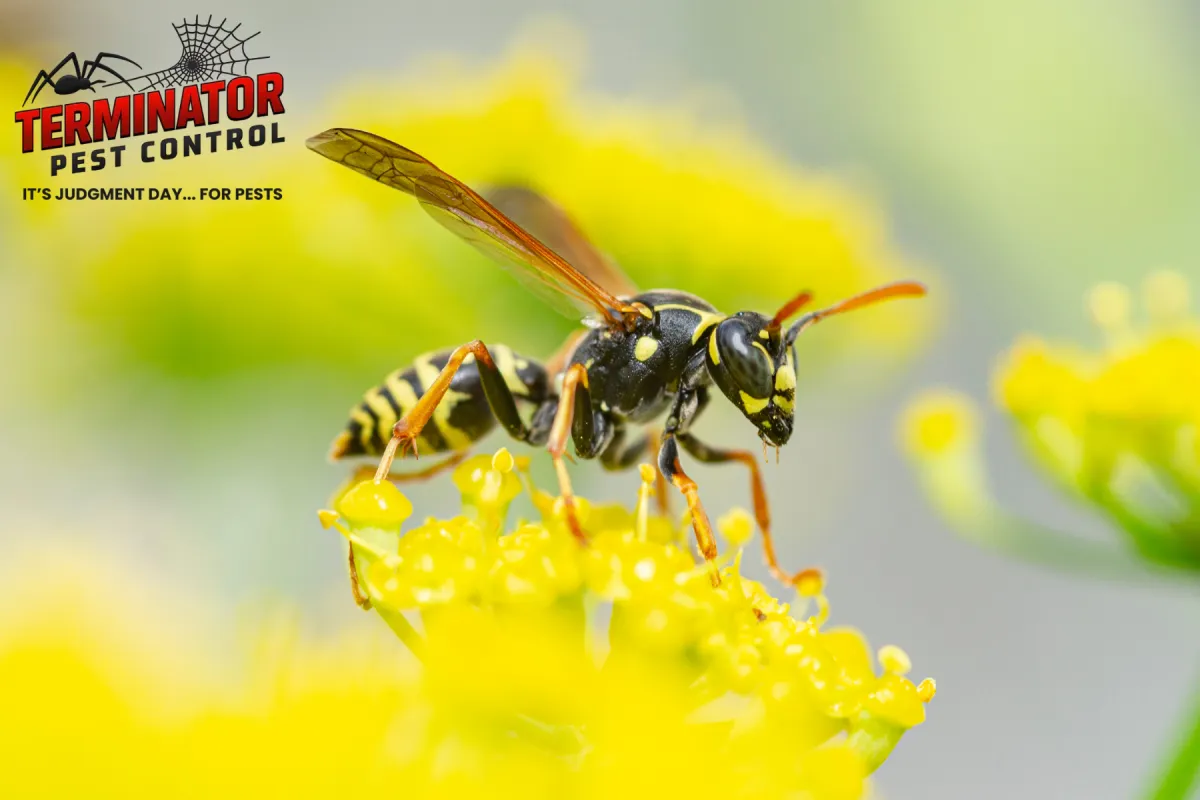
- Paper wasps: Usually have slender bodies and long legs. Their nests often have an exposed, umbrella-shaped comb beneath eaves or other sheltered areas.
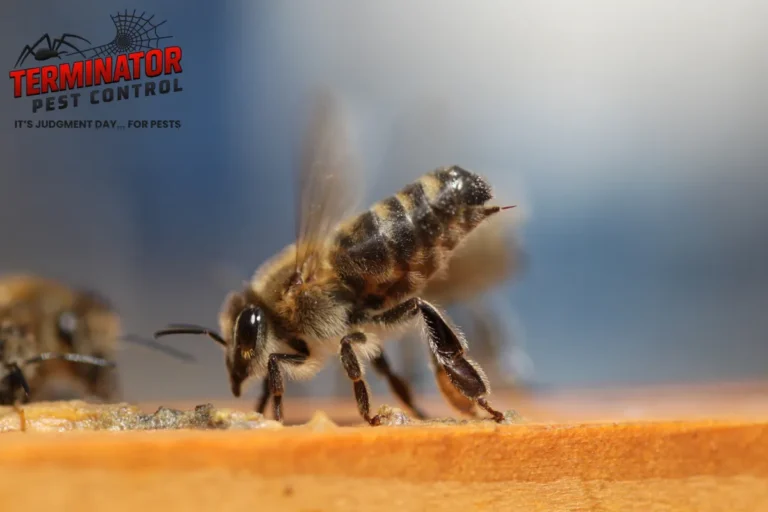
- Bees: Often have hairier bodies, although their appearance varies by species. Some nest in cavities, while others use soil or different locations.
Terminator Pest Control handles common species such as wasps, hornets, and bees, with recommendations based on the insect and the nest’s location. If you cannot identify the insect confidently, avoid approaching it and seek professional guidance.
Why Do Yellow Jackets Nest Inside Wall Cavities?
Wall cavities may offer shelter from weather and disturbance. When an opening provides access to a suitable space, some yellow jackets may use it as a nesting location.
Protection From Weather and Disturbance
An enclosed space can provide more shelter than an exposed location. A wall cavity may protect a nest from rain and direct sunlight while keeping it out of view.
Not every wall cavity will support a nest. The location, available access points, and conditions around the building all affect whether yellow jackets can establish themselves there.
Access Through Small Exterior Openings
Gaps around siding, roof edges, vents, and utility lines may allow insects to enter sheltered spaces. The opening can be small enough that homeowners overlook it during routine checks.
If yellow jackets are already using a gap, do not seal it before the situation has been assessed. Blocking the entrance does not eliminate the nest and may complicate efforts to determine where the insects are located.
Seasonal Changes in Activity
Yellow jacket activity often changes during the warmer months as colonies develop. You may notice more movement around a nest as the colony becomes more active.
Weather and local conditions can affect what you see. A sudden increase in sightings does not prove that a nest has formed inside your wall, so pay attention to whether the insects repeatedly use one opening.
What Should You Do If You Suspect Yellow Jackets Are Inside Your Walls?
If you suspect a hidden nest, focus on keeping people away from the area rather than trying to locate or remove it yourself.
- Keep your distance. Avoid standing near the suspected entry point or making sudden movements around it.
- Keep children and pets away. Restrict access to nearby walkways, patios, entrances, and other areas where someone could approach the nest accidentally.
- Observe from a safe location. If you can do so without approaching the opening, note where the insects appear to enter and exit.
- Do not seal the opening. Blocking a suspected entrance does not confirm that the nest has been removed.
- Do not drill into or open the wall. Disturbing a hidden colony may increase the risk of stings.
- Avoid DIY removal attempts. Pouring water or applying products into an unknown cavity may not reach the nest and could expose you to defensive insects.
- Contact a pest control professional. An exterminator in Sun Prairie, WI can assess the activity, identify the likely pest, and recommend an appropriate control method.
Professional help is especially important when the suspected nest is near a walkway, garden, play area, or entrance. People may accidentally approach the opening during normal outdoor activities.
Myth vs. Fact: Sealing the Opening Will Get Rid of Yellow Jackets
Myth: Sealing the hole where yellow jackets enter will make the problem go away.
Fact: Sealing an opening does not confirm that the nest has been eliminated. Yellow jackets may remain inside the wall cavity, and blocking the entrance can make the situation harder to assess.
Why DIY Removal Can Make the Problem Worse
A hidden nest is difficult to assess from outside the building. Applying a product through a small gap may not reach the nest, while drilling into the wall can disturb insects in an enclosed space.
Trying to cover the entrance can also make it harder to understand where the insects are traveling. Rather than attempting removal yourself, keep people away from the area and arrange a professional assessment.
Applying Our “Expert Technicians Provide Fast, Reliable Solutions” Approach
At Terminator Pest Control, “expert technicians provide fast, reliable solutions” means assessing the reported pest activity, identifying the likely stinging insect, and recommending an appropriate response. Instead of assuming every sighting points to the same problem, the goal is to understand the situation before suggesting the next step.
Identifying the Insect and Assessing the Situation
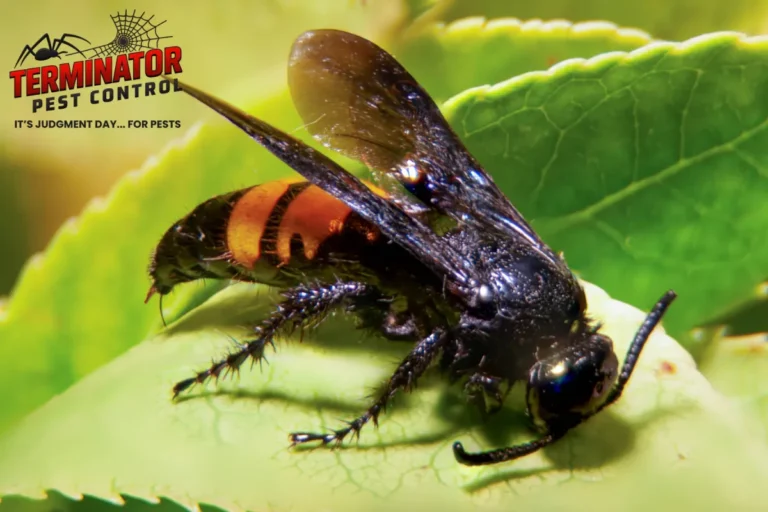
Yellow jackets, paper wasps, hornets, and bees can behave differently and use different nesting locations. Identifying the likely species and considering where the insects are active helps guide the recommendation.
If yellow jackets are repeatedly entering a wall gap, share that observation when arranging service. A professional can use the reported activity and the conditions around the property to assess the concern.
Recommending an Appropriate Control Method
The recommended response depends on the insect, the suspected nest location, and the conditions around the building. Terminator Pest Control assesses the situation and recommends a suitable control method rather than assuming one treatment is right for every case.
Homeowners comparing Sun Prairie pest control providers should look for clear explanations of the problem and the proposed next steps. A visible entry point may not reveal the nest’s full location, so the assessment matters.
Considering Exterior Applications and Prevention
Exterior applications may help prevent certain stinging insects from establishing around a structure, particularly paper wasps, when appropriate. However, an exterior application should not be presented as a guaranteed solution for a yellow jacket nest inside a wall.
The suspected nest and access point need to be considered when determining the appropriate response. Once the immediate concern has been assessed, suitable attention to exterior gaps may also help reduce future pest access.
Explaining Costs and Next Steps
Reliable service also means explaining what homeowners should expect before work begins. Terminator Pest Control notes that an inspection fee may apply to stinging insect jobs because these situations can require additional time to inspect and price correctly.
If you hire the company to complete the work, a portion of the inspection fee will be credited toward the job. Confirm the fee and credit details when scheduling your inspection.
People Also Ask: Yellow Jackets Nesting Inside Walls
How Do I Know If Yellow Jackets Are Living Inside My Walls?
Repeated activity around one exterior opening, buzzing sounds inside a wall, and recurring sightings nearby may indicate a hidden nest. These signs are not conclusive, so a professional assessment may be needed to determine the cause.
Can Yellow Jackets Get Through Walls and Into My House?
Yellow jackets may enter indoor spaces through gaps or openings connected to wall cavities. If you repeatedly find them indoors, avoid handling them and have the possible entry routes assessed.
Should I Seal a Hole Where Yellow Jackets Enter My Wall?
No. Do not seal a suspected entrance while yellow jackets may still be active inside. Blocking the opening does not confirm that the nest has been eliminated and may complicate the situation.
Can I Spray Yellow Jackets Inside a Wall?
DIY applications may not reach a hidden nest and could expose you to stings. Avoid disturbing the wall cavity and contact a professional for guidance on the appropriate control method.
Will Yellow Jackets Leave a Wall Nest on Their Own?
Activity may change over time, but fewer visible insects do not prove that the nest has been eliminated. If you suspect a nest inside your wall, arrange an assessment rather than relying on reduced activity alone.
Protect Your Home From Yellow Jackets With Professional Help
Contact a professional experienced in identifying and managing stinging insects. If you need a Sun Prairie exterminator, our team can assess the reported activity and recommend appropriate next steps.
Repeated yellow jacket activity around one wall opening, buzzing inside a cavity, or recurring sightings near windows and doors may indicate a hidden nest. Avoid sealing or opening the suspected entry point, and keep children and pets away from the area. Terminator Pest Control can assess the situation and recommend the appropriate next steps.
Our company provides professional stinging insect assessments and recommendations based on the situation. Call us now to discuss your concerns. Ask about any inspection fee when scheduling so you know what to expect.