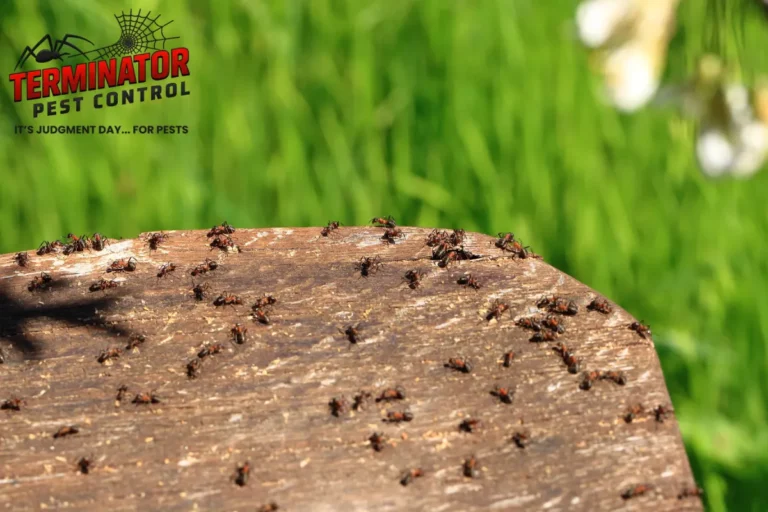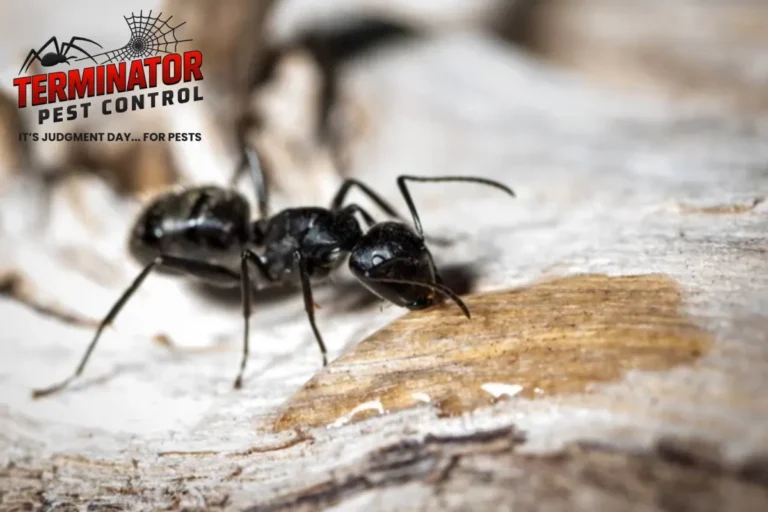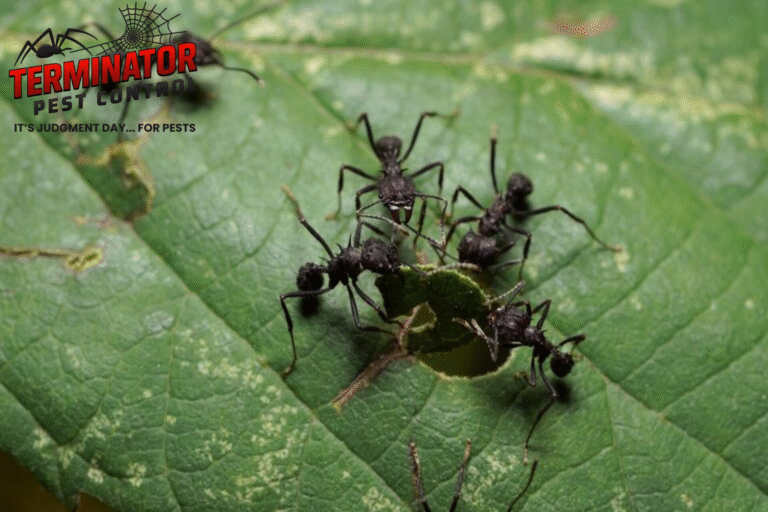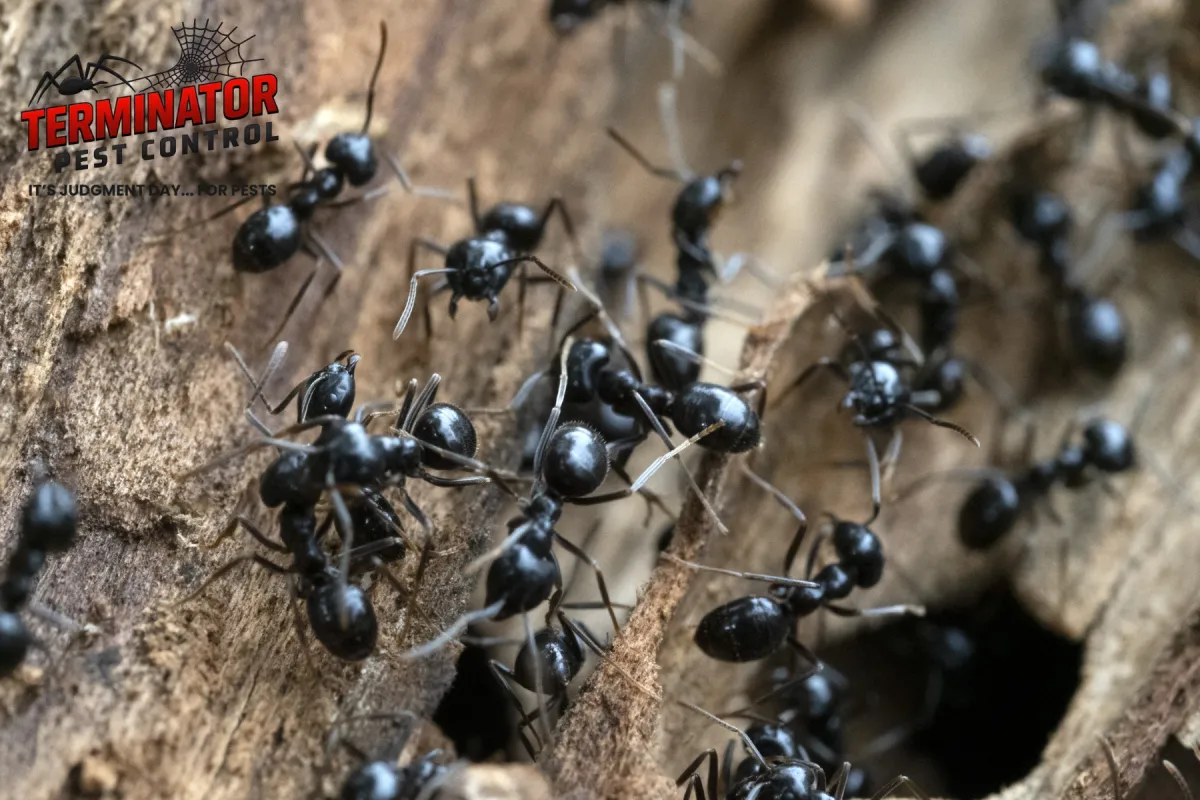

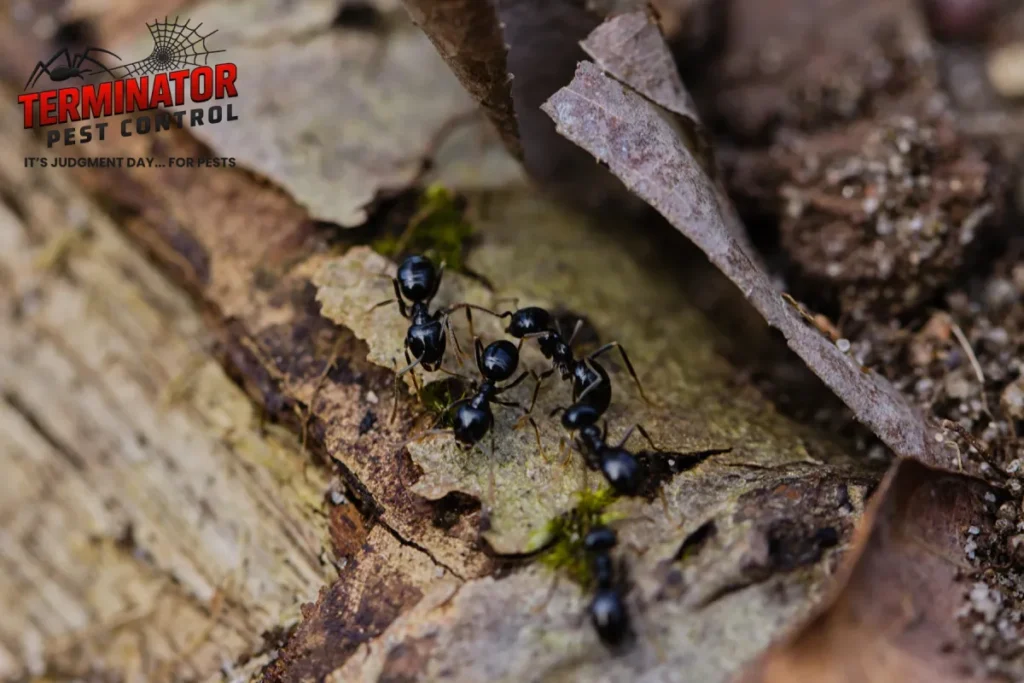
Carpenter ants are usually black, a half inch or longer, with one node between the thorax and abdomen and a smooth, evenly rounded back. They don’t eat wood like termites; they chew through it to build nesting galleries, so the giveaway is a pile of shavings that looks like coarse sawdust mixed with bits of dead insects, pushed out of a small slit in the wood. If you’re seeing that, or big black ants walking a straight line along a foundation or deck at dusk, it’s worth a closer look before the colony gets bigger.
What Actually Makes a Carpenter Ant Different From Every Other Ant in Your House
Most of the ants that show up on a kitchen counter in the summer are odorous house ants or pavement ants, and honestly, they’re a nuisance, not a structural problem. Carpenter ants are the ones I get called about more this time of year, and they’re a different animal. Size is the first tell: carpenter ant workers run anywhere from about a quarter inch to over half an inch, and in a single nest you’ll see a range of sizes because the colony has different worker classes doing different jobs.
The body shape is the real test if you want to be sure. Look at the section between the thorax and the abdomen; carpenter ants have one node there and a back that’s smoothly rounded, with no spines. Fire ants and some others have two nodes. If you can get a good look (or a decent photo) at that middle section, you can rule a lot of look-alikes out before you ever pick up the phone. If you’re still unsure, Cambria pest control professionals can help identify the ant and recommend the right approach.
The Frass Test: The One Sign Most Homeowners Miss
Here’s the thing nobody tells you: carpenter ants don’t eat wood the way termites do. They chew galleries through it to build a nest, and they push the debris out through small openings, called kickout holes. What lands underneath is called frass, and it looks like a little pile of coarse sawdust, but if you look closely, you’ll usually find bits of dead ants and insect parts mixed in. That mix is the giveaway. Sawdust alone from a drilled hole doesn’t have that; frass does.
I tell people to check window sills, the base of deck posts, and anywhere wood meets soil or has had a moisture problem: a leaky gutter, an old roof leak, a spot where snow piles up against the house all winter. Carpenter ants go after wood that’s already soft from moisture; they’re not typically the first thing to damage sound, dry lumber.
Where I Find Them Most on Calls Around Cambria and the Surrounding Towns
Growing up on a dairy farm, I learned early that old barn wood and carpenter ants go together. Out here in Columbia County, we’ve still got a lot of older farmhouses, outbuildings, and homes with a mix of original lumber and additions. That combination of age plus Wisconsin winters, ice dams, snow load against foundations, and the freeze-thaw cycle that opens up gaps, is exactly the setup carpenter ants look for. For homeowners dealing with these conditions, professional pest control in Cambria, WI can help identify vulnerable areas and address carpenter ant activity before it leads to more serious wood damage.
The most common spots I check on a residential call:
- Deck ledger boards and support posts, especially where they meet the ground
- Around bathroom and kitchen plumbing where a slow leak has softened framing
- Eaves and fascia boards with old or failing gutters above them
- Firewood stacked against the house (this is a big one, don’t stack it there)
- Old barns, sheds, and any structure with exposed, weathered lumber
Do Carpenter Ants Mean My House Also Has Termites?
Not necessarily, and this is a question I get a lot. Termites are confirmed in parts of southern Wisconsin, but they’re far less common here than carpenter ants, and the two cause damage in different ways. Termites eat wood fiber for food. Carpenter ants excavate it to nest, and they’ll actually leave a lot of frass behind as evidence, whereas termites tend to hide their damage behind mud tubes and thin wood surfaces. If you’re not sure which one you’re looking at, that’s exactly the kind of call where getting a trained set of eyes on it beats guessing, because the treatment approach for each is different.
Straight From the Truck: What I See Out Here
I’ve been doing this since 2008, and carpenter ants are one of the calls I take most seriously, not because they’re dangerous to people, but because by the time someone notices frass or a swarm inside the house, the colony has usually been established for a while. On a farmhouse call last fall, we traced an interior ant trail back to a deck ledger board that had been quietly rotting behind the siding for probably two winters. The owners had no idea. That’s the pattern I see again and again out here: it’s rarely the ants themselves that cost people money; it’s the moisture problem they’re pointing you to. Calling an experienced exterminator in Cambria, WI can help uncover the underlying moisture issues and address carpenter ant activity before the damage gets worse.
Frequently Asked Questions
Are carpenter ants dangerous to people or pets?
No. Carpenter ants can bite if handled, but they don’t carry disease and aren’t a health threat the way some pests are. The real risk is to the structure of your home if a colony goes unaddressed for a long time.
What time of year are carpenter ants most active in Wisconsin?
I see the most calls from late spring through summer, when swarmers (winged reproductive ants) leave established colonies to start new ones, and again in early fall as ants forage more aggressively before winter.
Can I get rid of carpenter ants myself?
You can sometimes knock down a foraging trail with an over-the-counter product, but that rarely reaches the actual nest, which might be inside a wall or a support beam. If you’re seeing frass or a consistent indoor trail, the nest is established, and a proper inspection to find it matters more than what product gets used on the ants you can see.
How much does carpenter ant treatment cost in the Cambria area?
The cost of carpenter ant treatment can vary depending on the extent of the infestation, the location of the colony, and the treatment needed for your property. Because every situation is different, pricing is typically determined after evaluating the ant activity and affected areas. Contact us to discuss your carpenter ant problem and learn more about treatment options for your Cambria-area property.
Where This Fits
This post supports the Residential Pest Control page from Terminator Pest Control, where we cover our full ant and general pest program for homes across Columbia County. If wood-destroying insects are the bigger worry, our Bat Exclusion pages also cover other structural entry points worth checking at the same time, since the moisture and gap issues that let ants in often let other pests in too.
Next Step
If you’re seeing frass, a trail of large black ants, or you just want a second set of eyes on an older structure before it becomes a bigger repair, give us a call today. We’ll walk the property with you and tell you straight what we find.