
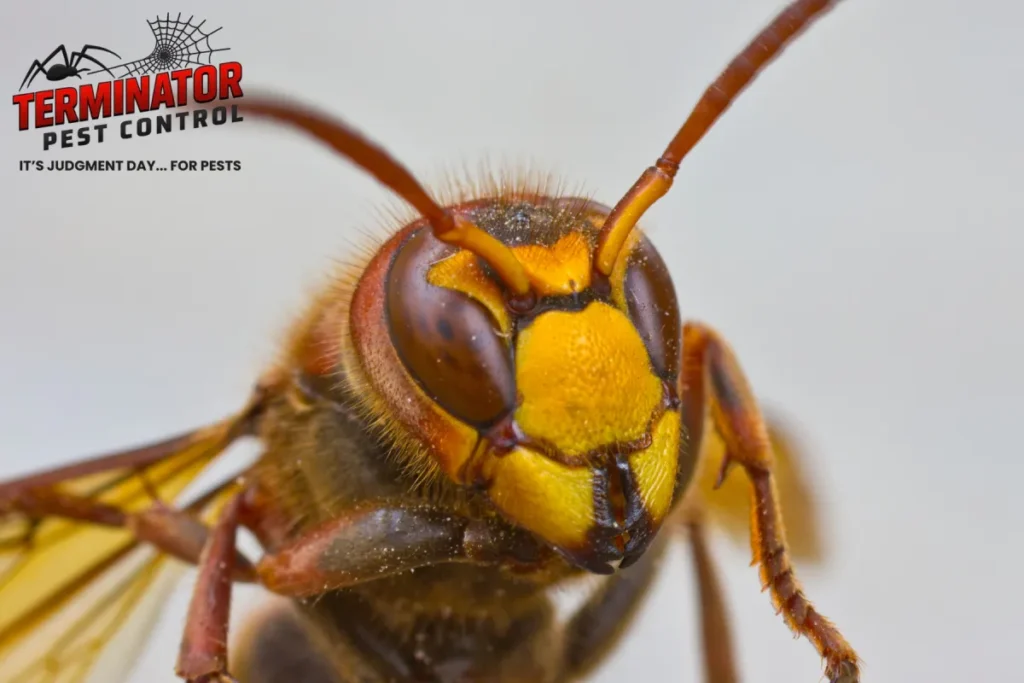
Professionals remove hornet nests in hard-to-reach areas by identifying the insect, assessing the nest’s location, and recommending a suitable control method. The approach depends on whether the nest is exposed, high above the ground, or hidden inside a wall or roof space. Because disturbing an active nest can lead to painful stings, property owners should keep their distance and contact a pest control professional.
Why Are Some Hornet Nests Difficult to Remove?
Hornet nests can be difficult to reach when they are high above the ground or hidden behind parts of a building. In some cases, property owners notice hornets entering a small opening without seeing the nest itself.
Common nesting locations include:
- Roof eaves and soffits: Gaps beneath roof edges can make nests difficult to see and access.
- High tree branches: Height and surrounding branches can make a nest harder to approach safely.
- Wall spaces: Hornets may enter through an exterior opening while the nest remains hidden inside.
- Attics and roof spaces: Limited visibility and tight access can make inspection more challenging.
- Areas near vents: Stinging insects may establish nests near openings that affect airflow or access to building systems.
The location matters because a visible entrance does not always reveal the full nest. Repeated hornet activity around the same opening may help identify a possible nesting area, but it does not confirm the nest’s exact position.
How Do Professionals Assess a Hard-to-Reach Hornet Nest?
Before recommending a control method, a professional needs to identify the insect and assess the surrounding conditions. This helps determine what kind of response may be suitable for the property.
Steps in a Professional Nest Assessment
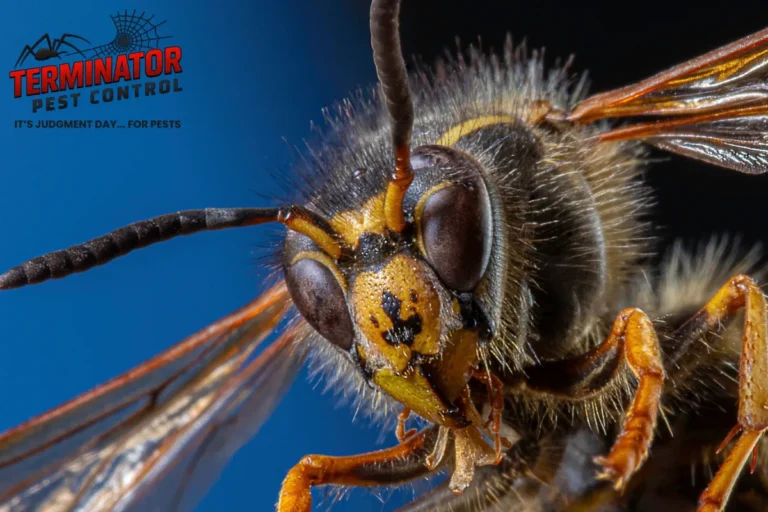
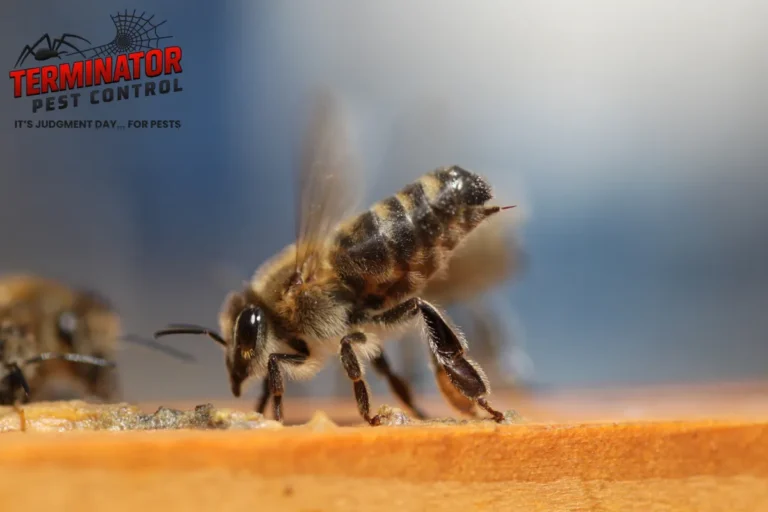
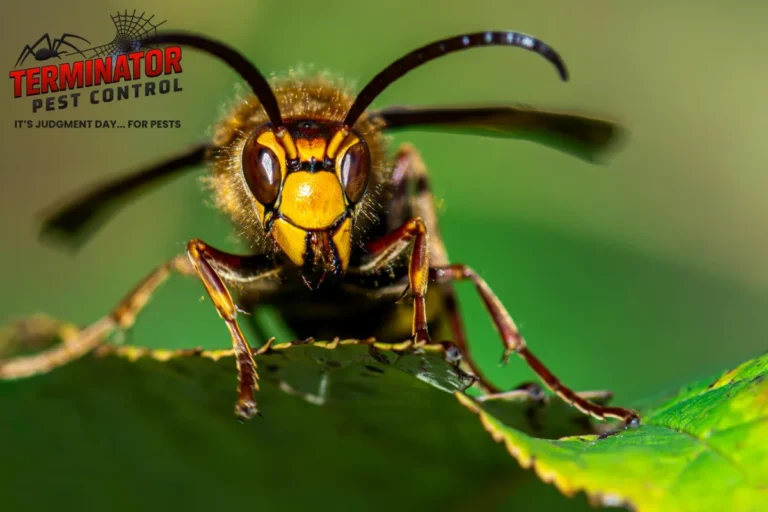
- Identify the insect. Hornets, wasps, and bees have different characteristics and nesting habits. Correct identification helps guide the next steps.
- Observe insect activity. Repeated entry and exit through the same opening may help narrow down the suspected nest location.
- Assess accessibility. The professional considers whether the nest is exposed, elevated, or hidden inside a structure.
- Check the surrounding area. Nearby doors, walkways, vents, and areas used by people may affect how the situation should be handled.
- Recommend a suitable control method. The recommendation depends on the insect species, nest location, and conditions found during the assessment.
For property owners in Middleton, noticing where hornets gather or repeatedly enter a building can provide useful information when arranging an inspection. There is no need to approach the opening or follow the insects closely.
What Methods Do Professionals Use for Hard-to-Reach Hornet Nests?
There is no single method that fits every hornet nest. Professionals consider the nest’s location and accessibility before deciding how to address the problem.
Comparing Nest Locations and Removal Considerations
| Nest location | Main challenge | Professional consideration |
| Roof eaves or soffits | The entrance may be partly hidden | Assess the roofline and access to the suspected nest |
| High tree branches | The nest is elevated | Consider the surrounding area and safe access options |
| Wall spaces | The nest may be concealed | Assess the entry point and determine whether more inspection is needed |
| Attics or roof spaces | Visibility and movement may be limited | Check access conditions and nearby hazards |
| Near vents or building openings | The nest may affect access to the system | Assess the location and possible impact on the structure |
Depending on the situation, professionals may need suitable protective equipment or specialized access tools. The equipment and control method will vary with the location and the risks involved. A nest in an exposed area presents different challenges from one hidden inside a wall.
If a nest is concealed within a building, further inspection may be needed before the best next step can be determined. Cutting into a wall or making other structural changes should not be assumed necessary before the situation has been assessed.
Why Does the Exact Nest Location Matter?
Knowing where a nest is located helps a professional understand the access challenges and choose an appropriate response. Treating a visible opening without understanding what lies behind it may not address every concern.
A proper assessment helps determine whether the nest is exposed or concealed, whether the surrounding area presents additional risks, and whether further inspection is needed. It also gives the property owner a clearer explanation of the recommended work.
What Should Property Owners Do Before Professional Removal?
The safest step is to avoid disturbing the nest while arranging professional help. Hornets may react defensively when their nesting area is threatened, so trying to reach or remove a nest without the right knowledge can increase the risk of stings.
Safety Steps to Follow
- Keep your distance. Do not approach the nest to get a closer look.
- Keep children and pets away. Limit access to areas where hornets are active.
- Do not block the opening. Avoid sealing gaps where hornets enter or exit, as this may disturb them.
- Avoid climbing to reach the nest. Roofs, ladders, and enclosed spaces can create additional hazards.
- Share your observations. Tell the professional where you have seen hornets entering and exiting.
- Ask about the inspection. Confirm what the assessment involves and whether an inspection fee applies.
When looking for pest control in Middleton, WI, property owners can explain where they have noticed hornet activity without trying to locate the entire nest themselves. These observations can help the professional understand the concern and decide what needs to be checked.
Myth vs. Fact: Can Every Hornet Nest Be Removed the Same Way?
Myth: Every hornet nest can be handled by treating the visible entrance.
Fact: The appropriate response depends on the insect, the nest’s location, its accessibility, and the surrounding conditions. A small opening may lead to a nest hidden inside a wall or roof space, so the entrance alone may not tell the whole story.
Disturbing an active nest without understanding its location can expose people to painful stings. Attempting to reach a nest high in a tree or beneath a roof edge can also create fall risks. A professional assessment helps determine what response is appropriate for the situation rather than relying on a one-size-fits-all method.
Understanding Professional Hornet Nest Assessments
Knowing a few common terms can help property owners understand what a professional may discuss during an inspection.
Nest assessment: An evaluation of the suspected nesting area, its accessibility, and the conditions around it.
Access point: An opening hornets use to enter or leave a nesting area. The opening may be visible even when the nest is concealed.
Concealed nest: A nest located inside a wall, roof space, or another area that cannot be fully seen from outside.
Protective equipment: Clothing and gear used to help reduce exposure to stings during professional work.
Follow-up inspection: An additional assessment that may be recommended if insect activity continues or the initial inspection cannot confirm the full situation.
These terms describe parts of the assessment process. For homeowners researching pest control in Middleton, understanding these terms can help clarify why each hornet nest requires an approach suited to its location and accessibility.
Applying Our “Expert Technicians Provide Fast, Reliable Solutions” Approach
At Terminator Pest Control, “expert technicians provide fast, reliable solutions” means identifying the stinging insect, assessing the situation, and recommending a control method based on the conditions found. It is not about using the same response for every nest. A hornet nest beneath a roof edge may require different considerations from one concealed inside a structure.
Identify the Insect and Assess the Situation
The first step is to determine which stinging insect may be present and assess where activity is occurring. Repeated entry through an exterior gap can help identify a possible nesting area, but the exact location may still need to be confirmed.
This assessment also helps distinguish hornets from other stinging insects. Terminator Pest Control’s service information identifies hornets, wasps, and bees among the common stinging insects found in Wisconsin.
Recommend an Appropriate Control Method
Once the insect and situation have been assessed, Terminator Pest Control can recommend a suitable method of control. The nest’s location, accessibility, and surrounding conditions help guide that recommendation.
The company also offers exterior applications that may help prevent stinging insects from establishing around a structure, particularly paper wasps. This is a preventive measure, not a guarantee that every type of stinging insect or nest can be prevented.
Explain the Process and Costs Clearly
Reliable service also means explaining what the inspection involves and what the customer can expect. Terminator Pest Control notes that an inspection fee may apply to stinging insect jobs because these visits can take extra time to inspect and price correctly. If the customer hires the company to complete the work, a portion of that fee is credited back.
This information helps property owners understand the process before scheduling and make an informed decision about the next step.
For anyone comparing Middleton pest control options, it is worth asking how the provider identifies stinging insects, assesses nest locations, and explains the recommended response before work begins.
People Also Ask
How do professionals reach hornet nests under roof eaves?
Professionals assess the roofline, the suspected nest location, and available access options before recommending a suitable approach. The right method depends on the nest’s position and the surrounding conditions.
Can a hornet nest inside a wall be removed?
A nest inside a wall may be difficult to locate because it is concealed. A professional can assess the entry point and determine whether further inspection is needed before recommending a control method.
Do professionals need to cut into a wall to remove a hornet nest?
Not always. The need for structural access depends on the nest’s location and what the inspection reveals. Structural changes should not be assumed necessary before the situation has been assessed.
Is it safe to remove a hornet nest from a tall tree?
Trying to reach a nest in a tall tree can expose someone to stings and falls. Keep your distance and contact a professional to discuss the situation.
What should I do if hornets keep entering a small opening?
Avoid blocking the opening or disturbing the surrounding area. Keep people and pets away, observe activity only from a safe distance, and tell a pest control professional where the hornets are entering.
How does Terminator Pest Control handle stinging insect concerns?
Terminator Pest Control identifies the stinging insect, assesses the situation, and recommends a method of control. An inspection fee may apply, and customers can ask about the fee and credit policy when scheduling.
Get Professional Help With a Hornet Nest
A hornet nest beneath a roof edge, inside a wall, or high in a tree can be difficult to assess safely. Avoid disturbing the nest or trying to reach it yourself. Terminator Pest Control can assess your stinging insect concerns and help you understand the available options.
Terminator Pest Control provides professional, customer-focused help with stinging insect concerns. Contact us now to discuss your concerns. Ask about any inspection fee when scheduling so you know what to expect.