To identify mouse entry points, sprinkle a thin, even layer of white flour or talcum powder along baseboards, near suspected gaps, and behind appliances. Leave the area undisturbed overnight to allow the mouse to leave “dust tracks.” These footprints create a visible map that leads directly to the rodent’s entry or exit point into your home.
The Science of Rodent Tracking
When dealing with a clever mouse, the biggest challenge isn’t necessarily catching it it is finding out how it got inside in the first place. These small intruders can squeeze through gaps as small as a dime, making a standard visual inspection feel like searching for a needle in a haystack. This is where the flour tracking method becomes an invaluable forensic tool for homeowners.
In many local neighborhoods, older homes and even new constructions often have hidden vulnerabilities around utility lines or foundation sills. By using a tracking medium like flour, you are essentially turning the mouse’s own biology and transit patterns against it. Mice are creatures of habit that prefer to travel along walls and “edges” where they feel secure. By dusting these runways, you create a high-contrast surface that captures every move, helping with effective pest control in Stoughton, WI.
Comparing Flour Tracking to Traditional Methods
While professional equipment exists, the flour method is highly effective for pinpointing active “commute” routes.
Diagnostic Comparison Table
| Feature | Flour Tracking Method | Standard Visual Inspection |
| Data Quality | Active (shows movement) | Static (shows where they’ve been) |
| Reliability | High for identifying “hot” holes | Moderate; may miss small gaps |
| Equipment | Household flour, sifter | Flashlight, mirror, scope |
| Effort Level | Passive (set and forget) | Active (requires physical searching) |
| Primary Goal | Finding the entry/exit point | Finding the nest or droppings |
During a recent audit of a property, we found that although the homeowner had seen droppings in the pantry, the flour tracks revealed the mice were actually entering through a gap behind the dishwasher and traveling across the entire kitchen floor under the cover of night.
Step-by-Step Guide to Identifying Entry Points
To get the most out of this method, precision in the application is key. Follow these steps to map your intruder’s movements.
1. Preparation of the Surface
Clean the floors in the suspected areas. Removing existing dust and debris ensures the tracks are sharp and easy to read. Focus on “pinch points,” the areas where a mouse must travel to get from one room to another.
2. Sifting and Dusting
Use a fine kitchen sifter to apply the flour. You only need a very thin layer (about 1/16 inch). If the flour is too thick, the mouse may avoid it, or the tracks will just look like blurry mounds. Place 6-inch-wide strips across baseboards and in front of any hole you suspect might be an entry point.
3. Directional Analysis
In the morning, use a flashlight held at a low angle to the floor. This “side-lighting” creates shadows in the tiny footprints, making them pop. Look at the “toe” marks; they will tell you if the rodent is coming into the room or heading out toward a wall. Follow the trail until it stops at a physical barrier. That is your target for rodent proofing.
Debunking the “One Hole” Myth
A common industry misconception is that “once you find and seal the main entry point, your mouse problem is over.” The Reality: Mice are highly social and investigative. If you seal one hole, they don’t simply give up; they pivot to secondary or tertiary entry points that they have already scouted. When we provide Stoughton pest control, we often find that a single colony uses three or four different “doors” to access a building. The flour method should be repeated for several nights, even after you’ve sealed the first hole, to ensure no new tracks appear elsewhere.
Applying our Trace-Logic System to Solve This
At Terminator Pest Control, we bring over 100 years of combined expertise to the table. While the flour method is a great DIY start, we utilize our proprietary Trace-Logic System to provide a permanent solution. This system is a core part of our Norway rat management and control program and our residential mouse services.
1. Inspect Your Home or Building for Points of Entry
Our technicians go beyond the floor level. We use tracking data to inspect your home or building for points of entry at every level, from the crawlspace to the roofline. Our 100+ years of expertise enable us to find entry points that flour might miss, such as gaps in the soffits or at roof intersections.
2. Rodent Proofing and Fortification
Once the entry points are mapped, we perform professional rodent proofing. We don’t use materials mice can chew through, like spray foam or wood. We use steel mesh, concrete, and specialized sealants to ensure the “doors” are locked for good.
3. Removal of Rodent Feces and Sanitation
A critical and often overlooked step is sanitation. Mice leave pheromone trails in their waste that signal to other rodents that your home is a safe haven. Our team handles rodent feces removal using industrial-grade HEPA filtration to prevent airborne pathogens from entering your living space.
4. Professional Sanitation
Following the removal, we perform a deep sanitation of the affected areas. This neutralizes the “scent of the nest,” reducing the likelihood that new mice will be attracted to the same spot in the future. This comprehensive approach is what makes us a leading exterminator in Stoughton, WI.
Why Professional Expertise Matters in Wisconsin
Living in the Midwest means dealing with heavy seasonal shifts. As the weather cools, rodents look for warmth and food. A “quick fix” or a few traps rarely solve a systemic issue. Our brand is professional, trustworthy, and family-oriented. We treat your home with the same care we would our own.
We offer customized protection plans, including our Gold and Platinum Protection Plans, which focus on long-term prevention. Whether you are dealing with a single mouse or a larger infestation, our goal is to restore your peace of mind by providing efficient, reliable, and customer-centered solutions.

People Also Ask (FAQ)
Is the flour method safe for my pets?
Yes, flour is non-toxic. However, if you have pets that might lick or walk through the flour, it can mess up your “data.” We recommend keeping pets out of the test area overnight for the best results.
What if I find tracks but no hole?
Sometimes the entry point is behind a heavy appliance or inside a cabinet base. If the tracks lead under a stove or fridge, that is where the breach is located. You may need to pull the appliance out to find the specific gap in the drywall or floor.
Can I use this for larger rodents like rats?
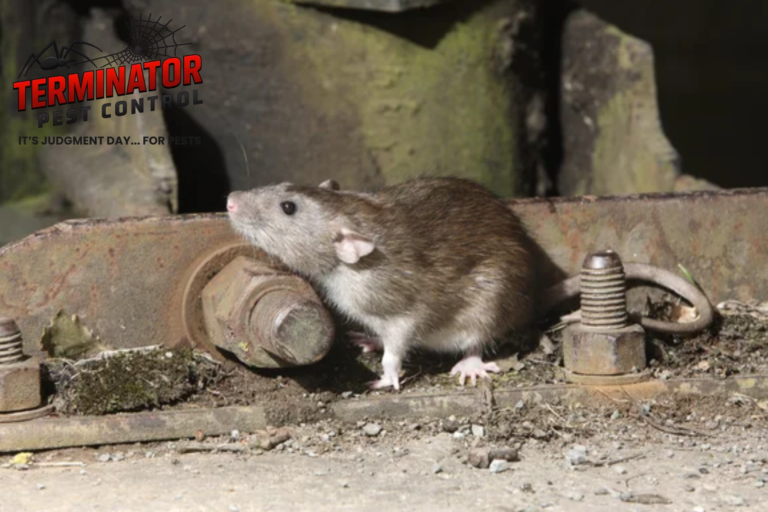
Absolutely. The same principles apply to our Norway rat management and control program. Rats have larger, heavier prints, but the tracking logic remains identical.
How do I know if the mouse is still inside?
If the tracks lead away from a hole and into the room, the mouse is entering the room. If they lead toward the hole and stop, the mouse has exited. If you see tracks going both ways, you have an active “highway.”
Reclaim Your Safety and Comfort
At Terminator Pest Control, we believe in integrity and customer satisfaction. We know how disruptive a rodent infestation can be to your daily life. Our mission is to provide you with the most effective, safe, and professional service backed by a satisfaction guarantee.
We want you to feel secure and reassured that your home is being protected by experts who care. Our family-owned values and a century of expertise set us apart, allowing us to offer solutions that actually last. Don’t let a small pest become a big problem.
Ready to find and fix those hidden entry points? Contact us today for a free quote or to sign up for one of our customized protection plans. Let us be your long-term partner in maintaining a healthy, pest-free environment.